I was about nine years old when I sat down on the couch, frustrated and heartbroken, and told my grandfather that I wanted to be rich.
Not because I wanted beautiful things or a life of luxury. I wanted to help people. I wanted to do something about the suffering I saw in the world.
Growing up in Los Angeles, I often accompanied my grandmother downtown. I saw homelessness, poverty, illness, and peoplestruggling with circumstances that seemed impossible to overcome. I also watched how others responded to them. Sometimes with compassion. Sometimes with indifference.
At home, I watched television coverage of the devastating famine in Ethiopia. I remember seeing the faces of children who were hungry and suffering. My heart ached for them.
But what could a little girl possibly do about problems so enormous?
In my mind, the answer was simple: I needed to become rich. I believed I needed to have more and become more before I could do more.
My grandfather, whom I affectionately called Dat-Daddy, listened to me. He didn’t laugh or dismiss my concern.
Instead, he asked why I wanted to be rich.
When I told him, he gave me an answer that would shape the rest of my life. “Jennie, you don’t need to berich to help. All you need to do is get involved.” Something changed in me that day.
His words liberated my imagination. Suddenly, helping people was no longer something I had to wait until adulthood, success, or financial abundance to begin.
I could start right where I was. And I did.
I was blessed to grow up surrounded by people who understood that family was about more than shared bloodlines.
My grandparents and godparents stepped into my life when my parents were unable to be there in the ways I needed. They offered me love, stability, acceptance, and belonging.
They didn’t have to. They chose to.
Looking back, I realize how profoundly those choices shaped the woman I would become. I also witnessed that same kind of love extended far beyond our family.
My great-grandmother operated a board & care group home for individuals living with mental and emotional challenges. Many hadexperienced rejection or had been made to feel that their lives held little value.
But in her home, they were welcomed, loved, and given opportunities to contribute. They had responsibilities. They had purpose. They belonged.
They called her “Mother,” and she affectionately called them her “boys.” One man, David, had become particularly attached to her.
During a visit, his father expressed his disapproval of David living in the home of a Black woman and told him he intended to move him elsewhere.
David refused.
“I’m not leaving my mother,” he said.
When his father responded that he would no longer visit, David made it clear that he had found a family where he wanted to stay.
I have never forgotten that story.
David wasn’t simply receiving care. He had found something every human being longs for: a place where he was known, valued, accepted, and loved.
I witnessed how belonging could restore dignity and give someone a renewed sense of purpose.
And I learned that sometimes the family we need is not the family we were born into, but the family that chooses to love us.
Throughout my life, I kept seeing people who needed someone to step into the gap.
Children growing up without dependable support. Single mothers carrying overwhelming responsibilities alone. Grandparentsraising grandchildren without the resources they need. Older adults facing illness and isolation. People living with mental health challenges who had been pushed to the margins of society.
I saw what could happen when the desire to belong went unmet.
And I saw what could happen when someone cared enough to show up. My grandfather’s words continued guiding me.
I volunteered to feed people experiencing homelessness. I helped older adults. I became a foster mother in my early twenties. I worked in community outreach, organized meal deliveries for people who were homebound, and helped individuals experiencing homelessness work toward rebuilding their lives.
Years ago, I also had the privilege of serving alongside a team supporting two Ugandan children, Samson and Shikira, who had traveled to the United States for lifesaving heart surgery through Samaritan’s Purse Children’s Heart Project.
They were accompanied by their mothers and an interpreter who traveled with them. During their time here, we welcomed them into our home for meals, spent meaningful time together, and formed relationships that went far beyond simply offering assistance.
Samson was just three years old, and he and I developed a particularly special bond.
As the day of his surgery approached, he asked if I would be at the hospital before he went into surgery and if I would be there when he woke up.
I assured him I would.
When Samson awakened from surgery, still groggy from the anesthesia, he looked at me and said two simple words:
I have never forgotten that moment.
Here was a little boy, thousands of miles from home, facing a life-threatening medical condition, who found comfort in knowing someone he trusted would be there when he opened his eyes.
We weren’t related by blood. But to Samson, I was Auntie.
And perhaps that is one of the most beautiful expressions of family—not necessarily the people we are born into, but the people whochoose to show up, who make us feel safe, and who remind us that we are not alone.
Years later, when my own grandchildren needed someone to step in, I became their caregiver.
For nearly a decade, raising my three granddaughters became one of the most significant expressions of this calling.
I hadn’t planned that chapter. There were dreams I placed on hold and paths I couldn’t pursue. But those girls needed family, and I had an opportunity to be there.
Through it all, one conviction only grew stronger.
We all need to know that we matter. That our lives have value. That someone would notice if we were missing, celebrate when we flourish, and come alongside us when we struggle.
What might our world look like if we began living that way intentionally?
A few years ago, my dear friend Je’net Kreitner invited me to participate in a Life by Design cohort.
At the time, I was still raising my granddaughters while trying to understand how the different pieces of my life, my experiences, and my long-held dreams might fit together.
Through the cohort, I was invited to revisit the callings and dreams that God had placed on my heart years earlier.
One assignment asked us to write a letter to someone who had believed in us, imagining ourselves ten years into the future, already living the vision God had given us.
I knew immediately who would receive my letter. Dat-Daddy.
At 4:02 in the morning, I began writing.
I imagined telling him about ten thriving, self-sustaining, interdependent communities across five states, with a vision to reach far beyond. About equipping leaders around the world to cultivate a new way of living together—communities rooted in Christ’s example of servant leadership, where people are connected, supported, restored, and empowered to flourish. I imagined hundreds of thousands of lives transformed, and even the wisdom he had poured into me being passed on to future generations through stories and books.
As I wrote, I was overwhelmed with emotion.
What if the little girl who once believed she had to become wealthy to help people could one day tell her grandfather that his simple words had inspired something far greater than she could have imagined?
And what if the hardships, interruptions, and unexpected turns in my life could become part of something God would use for the good of others?
Romans 8:28 reminds us that God works in all things for the good of those who love Him and are called according to His purpose.
I began to see my life through a different lens.
Perhaps some of what I had experienced wasn’t simply preparation for the vision. Perhaps it was part of the vision itself.
Sometime later, Je’net and I were walking through the Laguna Beach Sawdust Festival when I began sharing more about what I had envisioned.
I talked about creating an online community and, eventually, physical communities where people could experience the support and belonging of an extended family.
As we waited for a jazz performance, we began exploring possible names. Then it came together.
The domain was available.
Je’net looked at me and asked whether I was serious about pursuing the vision.
I was nervous. Excited. Perhaps a little overwhelmed by the magnitude of what I was imagining. But I said yes.
And she told me she wanted to be my first investor by purchasing the domain. We hugged and celebrated. I had tears in my eyes.
It was such a small beginning for something that felt so enormous. But once again, someone had chosen to get involved.
Imagine a neighborhood where people know one another beyond a friendly wave.
Where the older woman living alone isn’t forgotten, because the children down the street affectionately call her Grandma.
Where the single mother struggling to manage work, parenting, and life’s responsibilities has people she trusts who are willing to help.
Where an older adult’s wisdom and experience are not overlooked but treasured.
Where children grow up surrounded by people who encourage them, guide them, and celebrate their gifts.
Where gardens are tended together, meals are shared, skills are taught, and everyone has something meaningful to contribute.
Where the person receiving help today may be the very person offering it tomorrow. This is the heart of My Family By Choice.
We envision intentional, interdependent communities where individuals are welcomed into a chosen family and supported in pursuing a healthy, meaningful, and purposeful life.
Communities grounded in servant leadership, mutual responsibility, and the biblical calling to love our neighbors as ourselves.
Places that nurture well-being in mind, body, and spirit while creating opportunities for education, vocational development, shared resources, and meaningful relationships.
Not communities where everyone is expected to be self-sufficient in isolation, but where people become stronger through healthy interdependence.
Where everyone has dignity. Everyone has value.
Everyone belongs.
And everyone has something to give.
Recently, this vision has begun extending beyond the communities I originally imagined in the United States.
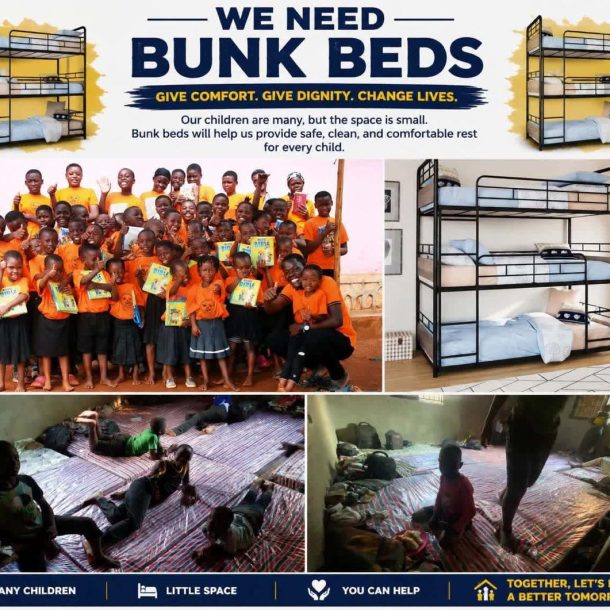
I have felt an increasingly strong calling toward children and vulnerable families in Africa, particularly Uganda.
I imagine a child who has known abandonment, hardship, or the uncertainty of life without a safe place to call home.
Then I imagine that child being welcomed into a loving community. Someone embraces them.
Someone knows their name. Someone believes in their potential.
They have opportunities to learn, develop skills, discover their gifts, and begin imagining a future that once seemed beyond their reach.
That picture moves me deeply.
And through a series of unexpected connections, conversations have begun with Bob Cavinder of Life by Design and local pastors in Uganda.
My husband and I have been grateful for the opportunity to come alongside this work as relationships develop, local leaders areequipped, and the possibilities for My Family By Choice begin to take shape.
Pastors Richard and David have been instrumental in helping establish these early connections. Local leaders are beginning toidentify the needs and strengths of their communities, laying the groundwork for thoughtful, locally informed planning.
There is still much to learn, plan, and develop. The organizational structure, funding, partnerships, and community model are in their early stages.
But I am grateful that the first conversations have begun.
My prayer is that, together with local leaders and committed partners, we can help develop sustainable communities where the mostvulnerable are not overlooked, but welcomed and given the opportunity to flourish.
I don’t pretend to have all the answers.
I have never founded an initiative of this magnitude.
But I believe meaningful change begins when people with different gifts, experiences, and resources come together around a shared purpose.
And I believe God has a remarkable way of bringing the right people together at the right time.
There is a reason I wanted to share this story.
My Family By Choice is still becoming. It is a vision in the early stages of development, and it will require wisdom, guidance,committed relationships, capable leadership, and resources to bring it to life.
We need people who believe in the power of community.
People who understand organizational development, sustainable agriculture, education, health, housing, and community leadership.
People willing to mentor, advise, serve, open doors, and help us explore responsible ways to fund the work.
And people willing to pray.
Perhaps as you’ve read this story, something has stirred in your heart.
Maybe you have experienced loneliness or witnessed someone you love struggle without support. Maybe you have gifts or resources you have been wondering how to use.
Or perhaps, like that little girl sitting on the couch all those years ago, you see the suffering around you and wonder what difference one person could possibly make.
I want to share with you the same words that changed my life:
If this vision resonates with you, I would be honored to connect, hear your thoughts, and explore how we might bring it to life together.
You can learn more and reach out through myfamilybychoice.org.
Because I believe that when we begin to see one another as family, we begin to change more than individual lives.
We begin to change the world around us. One person.
One family.
One community at a time.
And perhaps one day, another little girl will grow up surrounded by people who love her enough to get involved—and she, too, will discover just how much one life can change another.
Jennie DeKovner is the founder of My Family By Choice and Wise • Wealthy • Well, and a National Board Certified Health andWellness Coach. Her work is rooted in faith, intentional living, holistic well-being, and the belief that meaningful transformation begins when people are loved, valued, and supported.